Thursday, January 28, 2010

Sonnet Fest @ ND

Feel like taking the stage to read a sonnet? Miss Colloquium II and want to relive the excitement of Shakespeare's sonnets? Check out the sonnet-fest-athon at Notre Dame on February 10th from 11 to 3 in the Great Hall of O'Shaugnessy Hall (near the Snite).

Saturday, December 12, 2009

HUST celebrates


A few HUSTies in Christmas splendor...(thank you, Tippecanoe).

Saturday, November 21, 2009

Drafting the Declaration


During the screening of John Adams last night, we discussed the drafting process for the Declaration of Independence. With so many different versions, a helpful way to make sense of these changes is to read a hypertext copy from Duke University in which areas of difference are highlighted (taking you to an explanation of the additions, alterations, or deletions).

The Catholic Church & Art

Stumbled on an interesting BBC article about the Pope's interest in trying to renew interest in Vatican art.

Wednesday, November 11, 2009

Letters of a Peruvian Woman - Discussion Questions


I've posted your discussion questions up on the wiki, but you can also see the revised versions here:
  • In what ways is eighteenth-century French culture gilded? (think: "Furniture which I thought to be made of gold, is gold only on the surface, its true substance is wood; in the same way, what they call politeness thinly covers their shortcomings with an outward show of virtue" (59).
  • How does the voice of the Peruvian woman work as a critique? (think: of French culture? of women's roles in French society?)
  • How does the novel's epistolary structure become integral to the development of ideas about language, communication, and writing?
  • How can we understand Zilia's exploration of the differences between the written and spoken word?
  • What is the signficance of the novel's references to sun and light? (think...gold, knowledge, divine fire, etc.; go to Meghan's blog for an answer to this)
  • What do the roles that Zilia inhabits tell us about her relationship to her environment (Paris, French countryside, salon, Peru, etc.)

Monday, October 5, 2009

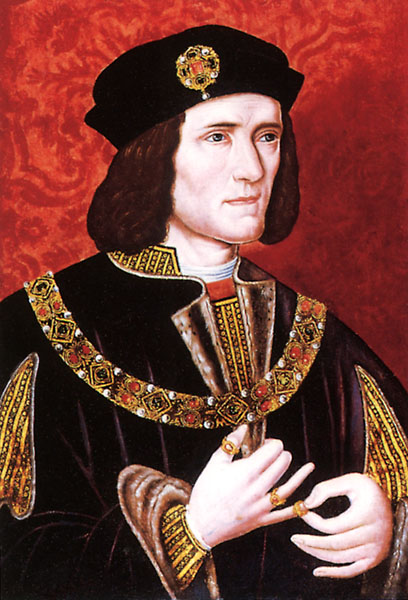
Richard III


HUST is headed to Chicago!

For a quick overview, summary, etc., check out Wikipedia's link on Richard III or the Chicago Shakespeare Company's own information on the play. For a general Shakespeare resource page, go here.

Richard III is one of several histories that Shakespeare wrote about England's past (specifically, the War of the Roses). There is even a Richard III society (our very own Professor Hicks was a member!) dedicated the study of the events and figures of this historic period.

Friday, October 2, 2009

More Milton...

I stumbled on this very helpful, user-friendly site the other day. What I like is that you can explore all different aspects of Paradise Lost--from Milton's religious influences to the history of the prints that were added to the 1688 version. And given our conversation yesterday in class, its title is very apropos: Darkness Visible.

Monday, September 28, 2009

Milton Mania!

In his Preface to Paradise Lost, David Scott Kastan reminds us that Milton's epic was "the first English poem to receive full scholarly annotation" only 28 years after it was first published in 1667 (viii). With such early and extensive attention in print, it is not at all suprising that Milton has received due attention online as well. You can read a digital version of the poem, complete with reader-friendly interactive annotations in Dartmouth's Milton Reading Room. Original images of nearly every page of the second edition of Paradise Lost (1674) are available on John Geraghty's impressive facsimile collection. More dynamic yet, Paradise Lost Audiotexts provides four distinct ways of interacting with Milton's text: 1. text-only (modernized) 2. Annotation (displaying notes parallel to the text) 3. Comparison mode (displays the 1674 page next to the modern page) and 4. Your notes (allowing you to take notes next to the page as you read). Perhaps the most exciting bit about this site, though, is the ability to listen to Books 1, 2, and 9 with the audiotext feature. Finally, even The New York Times and the New York Public Library can't resist a little Milton mania: check out this exhibit of related art and artifacts.

Sunday, September 20, 2009

Anne Bradstreet Reading Guide


READING QUESTIONS
  • What do you know about the biographer, Charlotte Gordon, and how does this affect your reading of the book? In other words, what of Gordon's own experiences/points of view do you think she brings to her telling of Bradstreet's life?
  • Who does Gordon identify as influences in Bradstreet's development?
  • In her preface, Gordon suggests that Bradstreet would have imagined herself "the most modern of moderns" (xiii). What does she mean by that?
  • In what ways do Bradstreet's spirituality and intellectual life intersect?
  • What vision of England do you get through the perspective of Anne Bradstreet's life? How is it distinct from other points of view we have explored so far?
  • How does Bradstreet's role as a mother figure in important ways to her experience in New England?
  • What connections can you draw between this book and other texts we've read so far? Cabeza de Vaca, "Of Cannibals," "Of Plantations," to name a few....
MORE FUN WITH EARLY AMERICA...
Gordon includes an image of a seventeenth-century map as a way of orienting you to the Massachusettes Bay in the 1630s (a later edition is included above). The map was originally printed in 1634 as a part of William Wood's travel narrative, New England's Prospect. Wood traveled to the New World between 1629-1633 and offered one of the earliest accounts of colonial America.

Thursday, September 10, 2009

Early Modern Art blog

One of the blogs I follow regularly, Renaissance Lit, recently posted a link to this blog, Notes on Early Modern Art. It's a great resource, and worth checking out.

Wednesday, September 9, 2009

Your discussion questions & themes

Mary Ellen: Does the play confirm or deny assumptions about racial and religious difference in the early modern period?

Meghan: Given his status as a "foreigner," where does Othello belong?

Brigette: How do ideas about women's roles (where the household/family is the primary social unit dictating rules of behavior) affect your point of view of Othello's concerns over the loss of his reputation/honor?

Sarah: What anxieties about order and masculinity/mutability do we see at work in the play?

Megan: How do the passions influence the outcome of the play? What imbalances lead to extreme behaviors?

Hannahbeth: How legitimate and/or true do we consider appropriations, adaptations, or translations of the play?


Emerging Themes:
  • control/containment
  • projecting anxieties (on the "other")
  • the problem of the binary
  • rank & rule
  • boundaries
  • inner/outer and spiritual/physical

Also...the wiki is primed and ready for your handout posting.

Sunday, September 6, 2009

Othello (1965): Laurence Olivier & Maggie Smith

We'll be discussing film adaptations and performances of Othello in class on Tuesday. Please take a look at this 10-minute clip of the play's final scene (Act 5, scene 2) from a 1965 performance with Laurence Olivier as Othello in blackface and Maggie Smith as Desdemona (a.k.a. Professor McGonagall from Harry Potter). How does it compare to the 1995 version with Laurence Fishburne and Kenneth Branagh that you saw in class (& will hopefully watch at one of your HUST club events soon)?

Thursday, August 27, 2009

Othello Resources

Resources:

Reading Questions:
  • What "languages of difference" do the other characters use when describing or interacting with Othello? How does Othello respond? How does he represent himself?
  • The play opens in Venice, Italy. Given what you know about Venice in the 15th and 16th centuries, why might this be a significant choice?
  • What are your impressions of Desdemona? Does she strike you as independent or "feminist"? In what ways is she caught in the oppressive cycle of her cultural moment?

Tuesday, August 25, 2009

There's still time...

...to see Twelfth Night through Notre Dame's Shakespeare Festival. The show runs until Aug. 30.

Welcome to the new & improved HUST blog

First of all--welcome to your senior year! I've caught glimpses of your blog posts about summer adventures and am eager to hear more about them.

You'll have the chance to bring your bloggin' into the 17th and 18th centuries this semester, both in Colloquium and in Cultural History. Raully Donahue will be joining the ranks of HUST bloggers and sharing this forum, posting his own thoughts/reflections/announcements from the historian's POV. The idea is that we can increase the overlap between the literature and history sides of the Restoration and Enlightenment. Of course, you're encouraged to do the same on your blogs.

See you in class.

Friday, June 5, 2009

Colloquium III

For those who are curious or who'd like to get a head start ordering/finding/reading books, I've begun posting information about our fall Colloquium III course on the wiki. Feel free to go check it out, and let me know if you have any questions.

Summer Film Series @ ND: 8/13-8/15


I just received a brochure in the mail the other day reminding me of the 2009 Notre Dame Shakespeare Festival. The mainstage production will be Twelfth Night, which runs the last two weeks of August. Also worth mentioning, though, is the film series they are running at the same time. If you'd like an excuse to watch some good films that will, among other things, prep you for Colloquium III (they all treat some aspect of 16th- and 17th-century England), go check out Twelfth Night (with Ben Kingsley and Helena Bonham Carter), Stage Beauty (with Claire Danes and Billy Crudup) or Shakespeare in Love (with Joseph Fiennes...think Luther....and Gwyneth Paltrow).

Friday, April 17, 2009

Career options - free online seminar

Starting and Building a Career in the Nonprofit World

Tuesday, April 21, at 12 noon, U.S. Eastern time

College students preparing to graduate this spring are facing extraordinary uncertainty about their career prospects. Not only is the job market tight, but they also confront increased competition from experienced nonprofit workers who have been laid off and businesspeople who want to change careers.

So what can new graduates do to land their first professional job? How can they stand out in a crowd of more experienced applicants? What should a college senior be doing now to prepare for a future career in the nonprofit world? And how can people who have been working for a few years for charities and foundations make the most of their opportunities?

Join us on Tuesday, April 21, as we explore these questions and others.

Wednesday, April 15, 2009

Digi-topia?

Here's a thought: Does the internet and the many online spaces/forums it provides (I'm thinking especially of SecondLife) offer utopic domains....digi-topias?? Is the internet a true commonwealth? Perhaps more of a capitalist/commonwealth hybrid (especially given how much money changes hands...or digi-hands...online)?

Food for thought for tomorrow's discussion on Thomas More.

Monday, April 13, 2009

Images of the Carnivalesque


One possible thread we might follow in our discussion of Bakhtin's notion of medieval folk humor (the carnivalesque) is how Erasmus's The Praise of Folly (according to Bakhtin, a literary example of "high " intellectual, collective laughter) compares to any visual representations of folly or carnival during the period. Something that came to mind is Pieter Bruegel the elder's Netherlandish Proverbs (1559, see above) in which Bruegel paints over one hundred scenes of common proverbs on one canvas. The result is a kind of symbolic chaos. Wikipedia offers an overview of the various proverbs-come-alive, with details explaining each scene. Bruegel's The Wedding Dance (1566, the one in our HUST classroom on the back wall by the windows) might also help us think about the relationship between carnival, satire, the Reformation and early Renaissance humanist thought. How do you think Bakhtin would interpret the paintings? Erasmus?