Saturday, November 21, 2009

Drafting the Declaration


During the screening of John Adams last night, we discussed the drafting process for the Declaration of Independence. With so many different versions, a helpful way to make sense of these changes is to read a hypertext copy from Duke University in which areas of difference are highlighted (taking you to an explanation of the additions, alterations, or deletions).

The Catholic Church & Art

Stumbled on an interesting BBC article about the Pope's interest in trying to renew interest in Vatican art.

Wednesday, November 11, 2009

Letters of a Peruvian Woman - Discussion Questions


I've posted your discussion questions up on the wiki, but you can also see the revised versions here:
  • In what ways is eighteenth-century French culture gilded? (think: "Furniture which I thought to be made of gold, is gold only on the surface, its true substance is wood; in the same way, what they call politeness thinly covers their shortcomings with an outward show of virtue" (59).
  • How does the voice of the Peruvian woman work as a critique? (think: of French culture? of women's roles in French society?)
  • How does the novel's epistolary structure become integral to the development of ideas about language, communication, and writing?
  • How can we understand Zilia's exploration of the differences between the written and spoken word?
  • What is the signficance of the novel's references to sun and light? (think...gold, knowledge, divine fire, etc.; go to Meghan's blog for an answer to this)
  • What do the roles that Zilia inhabits tell us about her relationship to her environment (Paris, French countryside, salon, Peru, etc.)

Monday, October 5, 2009

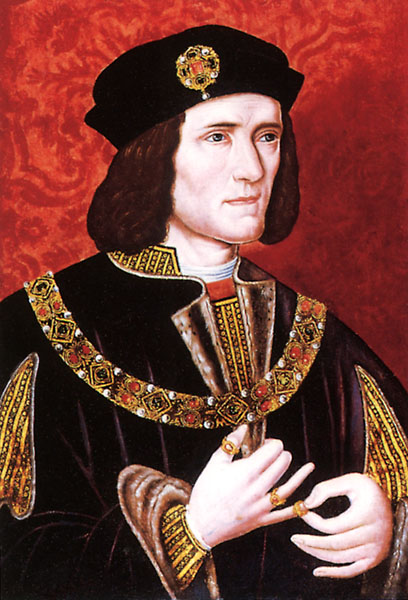
Richard III


HUST is headed to Chicago!

For a quick overview, summary, etc., check out Wikipedia's link on Richard III or the Chicago Shakespeare Company's own information on the play. For a general Shakespeare resource page, go here.

Richard III is one of several histories that Shakespeare wrote about England's past (specifically, the War of the Roses). There is even a Richard III society (our very own Professor Hicks was a member!) dedicated the study of the events and figures of this historic period.

Friday, October 2, 2009

More Milton...

I stumbled on this very helpful, user-friendly site the other day. What I like is that you can explore all different aspects of Paradise Lost--from Milton's religious influences to the history of the prints that were added to the 1688 version. And given our conversation yesterday in class, its title is very apropos: Darkness Visible.

Monday, September 28, 2009

Milton Mania!

In his Preface to Paradise Lost, David Scott Kastan reminds us that Milton's epic was "the first English poem to receive full scholarly annotation" only 28 years after it was first published in 1667 (viii). With such early and extensive attention in print, it is not at all suprising that Milton has received due attention online as well. You can read a digital version of the poem, complete with reader-friendly interactive annotations in Dartmouth's Milton Reading Room. Original images of nearly every page of the second edition of Paradise Lost (1674) are available on John Geraghty's impressive facsimile collection. More dynamic yet, Paradise Lost Audiotexts provides four distinct ways of interacting with Milton's text: 1. text-only (modernized) 2. Annotation (displaying notes parallel to the text) 3. Comparison mode (displays the 1674 page next to the modern page) and 4. Your notes (allowing you to take notes next to the page as you read). Perhaps the most exciting bit about this site, though, is the ability to listen to Books 1, 2, and 9 with the audiotext feature. Finally, even The New York Times and the New York Public Library can't resist a little Milton mania: check out this exhibit of related art and artifacts.

Sunday, September 20, 2009

Anne Bradstreet Reading Guide


READING QUESTIONS
  • What do you know about the biographer, Charlotte Gordon, and how does this affect your reading of the book? In other words, what of Gordon's own experiences/points of view do you think she brings to her telling of Bradstreet's life?
  • Who does Gordon identify as influences in Bradstreet's development?
  • In her preface, Gordon suggests that Bradstreet would have imagined herself "the most modern of moderns" (xiii). What does she mean by that?
  • In what ways do Bradstreet's spirituality and intellectual life intersect?
  • What vision of England do you get through the perspective of Anne Bradstreet's life? How is it distinct from other points of view we have explored so far?
  • How does Bradstreet's role as a mother figure in important ways to her experience in New England?
  • What connections can you draw between this book and other texts we've read so far? Cabeza de Vaca, "Of Cannibals," "Of Plantations," to name a few....
MORE FUN WITH EARLY AMERICA...
Gordon includes an image of a seventeenth-century map as a way of orienting you to the Massachusettes Bay in the 1630s (a later edition is included above). The map was originally printed in 1634 as a part of William Wood's travel narrative, New England's Prospect. Wood traveled to the New World between 1629-1633 and offered one of the earliest accounts of colonial America.